
CISRS and Women's Studies
CISRS, as a Christian research institute, began its journey in India in 1950s with the aim of encouraging Indian Christian communities to participate in the nation-building process based on modern values such as equality, liberty, justice, and freedom. Since the beginning, the institute focused on the interactions between religion, culture, and society, addressing social evils such as caste, patriarchy, and underdevelopment. One of the key concerns for CISRS was the struggle of Indian women to achieve social status, dignity, and justice, as reflected in the women's movements that have emerged over time in the country.
In 1959, CISRS published a book titled The Changing Pattern of Family in India, which emphasized a Christian vision of family as "a fellowship of free persons bound together by love and common purpose."[1] The book recognized that acknowledging "the equality of man and woman" would have "far-reaching consequences," and aimed to understand the evolving changes in Indian society and the issues that arose from these changes. However, Frank Thompson observes that while the book affirmed the concept of a mutually responsible family, it failed to recognize the significant domestic responsibilities of women and their challenges regarding health, education, and inheritance.[2]
In 1962, CISRS released Problems of Indian Democracy, which sought to address the social and political analyses of the time, affirming the inalienable rights of all human beings regardless of gender and class disparities. The publication noted legislative measures that had elevated women's social status, such as increasing the minimum age for marriage and introducing the anti-dowry act.[3] Recognizing societal changes, the 1975 Biennial Council mandated the inclusion of women in CISRS programs, leading to the formation of the Joint Women’s Programme (JWP)—a joint initiative with the William Carey Study and Research Centre (WCSRC) in Kolkata in 1977-78.
Joint Women’s Programme (JWP)
The Joint Women’s Programme, led by Jyotsna Chatterji, provided a bold platform for Christian women in the CISRS to collaborate with women from various faiths and secular backgrounds in their quest for justice. The JWP initiated several women empowerment movements, including the People’s Responsible Organization of United Dharavi (PROUD) and Bangalore Mythri Sangha, which aimed to organize women living in slums to enhance their social standing.
In her article "Dimensions of Women’s Struggle," Chatterji identifies two primary categories of women's oppression: one based on caste and class, and the other based on gender. She argues that when these factors intersect—especially for women from backward castes, Scheduled Castes, and tribal backgrounds—the intensity of oppression increases. Each group of women—whether rural or urban poor, working women, or educated women—faces distinct challenges and struggles.[4]
JWP envisioned a comprehensive women’s movement that would promote solidarity among all sections of women. It combined grassroots activism among the urban and rural poor with advocacy and consultation among more privileged women. During this period, JWP published several studies, including Women in Organized Movements (1981), Status of Women in Rural India (1982), The Status of Single Women in India (1981), The Status of Benjara Women in India (1988), and Women’s Participation in Political Parties (1989) collecting papers presented in various consolations and seminars.
Two CISRS seminars were particularly significant. in this period, in discussing Law and Religion concerning Indian women. Under JWP, CISRS organized a seminar in 1988 on "Economic and Property Rights of Women," which highlighted vital issues such as women's rights in India, access to land and work, and gender bias in inheritance and property rights. A second seminar, held in Bangalore in 1985, examined the authority of religions and the status of women, analyzing how despite scriptures asserting the moral and spiritual equality of women to men, they often perpetuate the subordination of women in actual social life.[5] In short, the role of JWP in steering CISRS toward recognizing the struggles of Indian women in their pursuit of social standing and rights is undeniable.
Women and Church: Theory and Theology
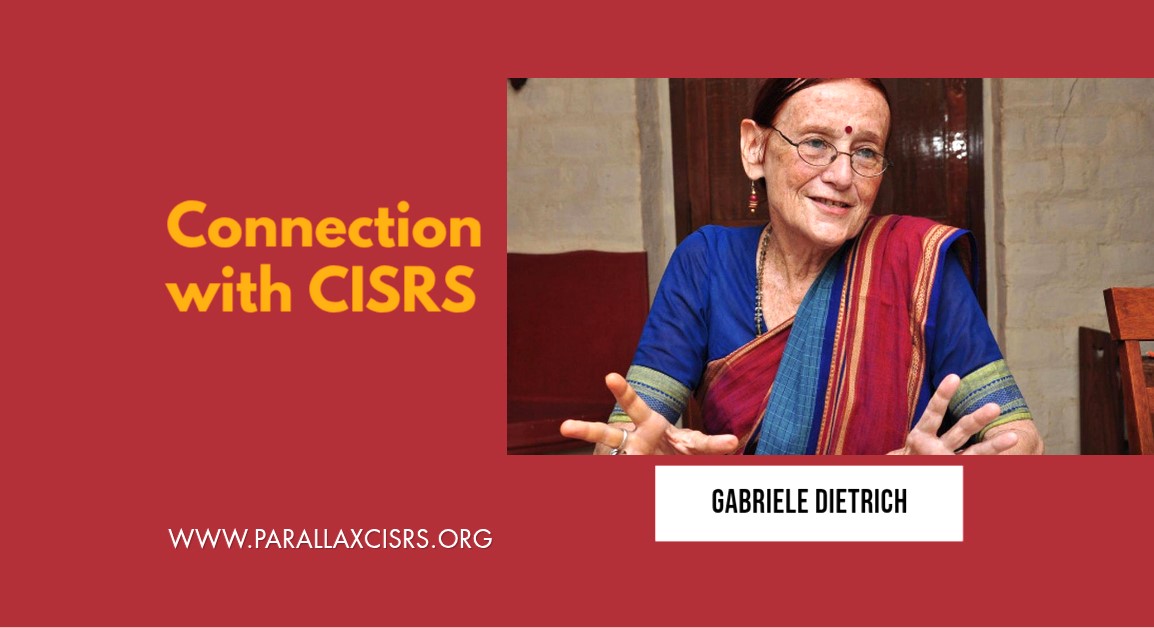
Gabriele Dietrich criticizes churches’ theological engagements with women’s' movements for lacking an awareness of methodological frameworks or theoretical assessments, despite the fact that women’s movements often uphold them.[6] In contrary, CISRS has adopted a nationalist, socialist and Marxist feminist methodological approach since the national freedom movement time to the Joint Women’s Programme in the post-emergency period and later Dalit-feminist and tribal-feminist concerns came to existence under the Marxist ideology and the Liberation theology framework.
In the 1980s, discussions about the Uniform Civil Code arose in relation to the Muslim Women’s (Protection of Rights on Divorce) Act of 1986. This prompted a need to examine women's issues through cultural and religious frameworks that extend beyond the class analysis typically associated with Marxist interventions with the state. There was an urgent need to address women’s issues within religious contexts and to develop a feminist theory and theology that affirms their political positions both within and outside religious institutions.
This shift led to theological affirmations that introduced new feminist and womanist perspectives on women's bodies, gender, and politics within and outside of the church in India. Gabriele Dietrich raised the question of the relationship between women’s movements and religious reform, arguing that authentic religious reform highlights the humanist aspects of a religion in a way that allows non-believers or adherents of other faiths to relate to its humanist principles.[7] This call signaled the emergence of a post-Marxist feminist theory and theology that embarks on a post-secular platform for engagement.
In Search of New Paradigms
A statement from the national workshop organized by CISRS in 2012, titled “New Expressions on Indian Womanism: A Theological Response,” emphasized the role of women theologians in critiquing all forms of oppression and envisioning a liberated community. This inspires both men and women to recognize their potential to envision a shared humanity. The affirmation describes feminism as the desire for freedom to live, express, and communicate, while also capturing the struggle to challenge the hegemonic powers that silence the voices of the weak and impede freedom and justice both within and outside of the church.[8]
Mercy Kappen, during a CISRS consultation on the theme of “Women Shaping Theology,” referenced the multifaceted nature of the womanist discussion. She proposed an intersectional feminist theology that transcends binary distinctions such as feminine/masculine, mind/body, nature/culture, individual/community, and personal/political. Kappen noted: “Intersectional theology begins at the intersections and aims for liberation and justice for all people, embracing their diverse identities. We must center intersectionality in biblical interpretations, theologies, and church practices. Feminist theologies cannot be developed without addressing factors such as race, caste, sexual identity, social class, ability, gender identity, and age.”[9]
In her discourse, Aruna Gnanadasan, delivering the P.D Devanandan & M.M. Thomas memorial lecture in 2022, defines feminist theology as a political theology that nurtures hope for the liberation of humanity. She states: “Feminist theology, as a political theology, fosters hope for establishing a just and equitable political order where all human beings, regardless of caste, class, or identity, along with all of creation, can experience a fuller realization of life—paying particular attention to women's struggles for justice and dignity. Feminist political theology will guide us through a dual process of critique and reconstruction on our journey toward a new future for all.”[10]
What Lies Ahead...
Since its inception, the CISRS platform has addressed women's concerns with the necessary depth and seriousness, reflecting and influencing women's movements both within and outside the church in India. It has explored various approaches to engage with these issues and has provided insights through CISRS publications and programs.
The challenge facing CISRS now is to engage with contemporary women's movements and knowledge systems that go beyond traditional empowerment and solidarity projects. It should learn from these initiatives how Indian women envision a radical world characterized by diversity and difference. How do these feminist epistemological and political interventions envision a world rooted in respect, honor, and mutuality? This understanding requires an awareness of post-Marxist, identitarian, and essentialist perspectives and contexts.
Rev. Dr. Y.T. Vinayaraj is the Director of CISRS.
[1] P.D. Devanandan and M.M. Thomas, eds., The Changing Pattern of Family in India (Bangalore: CISRS, 1959).
[2] A. Frank Thompson, The Christian Institute for the Study of Religion and Society, A Research Arm of Christian Churches in India (Lewiston: The Edwin Mellen Press, 1992), 87.
[3] P.D. Devanandan and M.M. Thomas, eds, Problems of Indian Democracy (Bangalore: CISRS, 1962), 60
[4] Jyotsna Chatterji, “Dimensions of Women’s Struggle,” Religion and Society, Vol. XXX, Nos. 3 & 4, 69.
[5] Religion & Society, Vol. XXX, Nos. 3 & 4, December 1983.
[6] Gabriele Dietrich, “South Asian Feminist Theory and Its Significance for Feminist Theology,” in New Thing on Earth (New Delhi: ISPCK, 2001), cited by Mrinalini Sebastian, “Gender and Community: Implications for a Contemporary Theory of Feminism, Religion and Society, Vol. 52, Number, 1, March 2007, 40-53.
[7] Gabriele Dietrich, “Women and Religious Identities in India after Ayodhya,” in August All Odds: Essays on Women and Development from India Pakistan, eds. Kamala Bhasin, Ritu Menon and Nighat Said Khan, !New Delhi: Kali for Women, 1994), 37
[8] Religion & Society, Vol. 58, Numbers 1 & 3, March-June 2013, 107-109
[9] Mercy Kappen, “Women Reshaping Theology: Challenges and Hopes,” Religion & Society Vol. 63, Number 4, October 2018, 1-9.
[10] Aruna Gnanadason, “Feminist Political Theology in India,” Religion & Society, Vol. 70, Number 1, January 2025, 41-59.
Become a member
Get the latest news right in your inbox. We never spam!





Comments
No Comments