
CISRS and Dalit Studies
The Christian Institute for the Study of Religion and Society (CISRS) is a key organization in India, focusing on Christian social engagement and research related to marginalized communities. Founded in the 1950s as a research arm of Indian churches, CISRS empowers Indian Christian communities to transform society into a more just and inclusive environment, particularly by addressing caste issues and promoting Dalit studies.
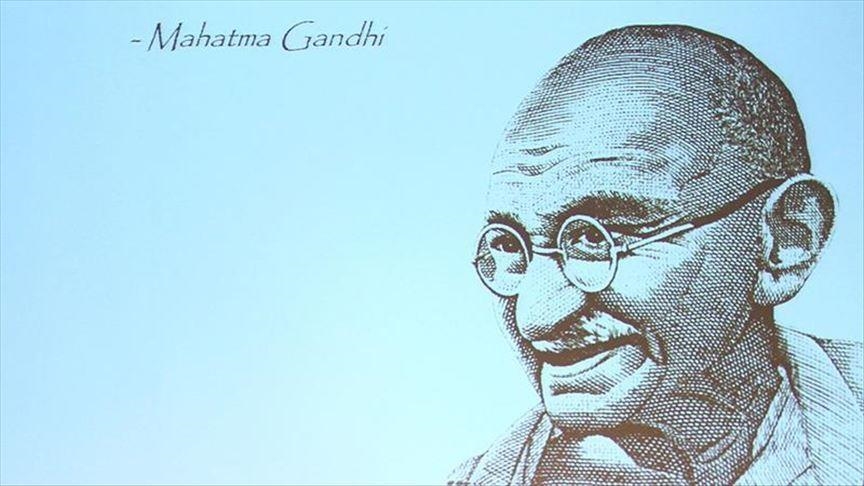
In its early years, CISRS focused on nation-building in post-independence India, drawing inspiration from Gandhian nationalism, Nehruvian, and Lohia’s socialism.[1] It recognized that entrenched practices of caste and untouchability hindered the establishment of a just nation-state. Embracing constitutional morality, CISRS championed economic justice and addressed caste divisions, advocating for an inclusive and equitable nationalism essential for a new nation-state.[2]
Colonialism in India reinforced the caste system, marginalizing groups like Dalits and relegating them to an “othered” status in society. While colonial governance challenged the existing Brahminic structure, it ultimately perpetuated the same representative system,[3] leaving Dalits profoundly excluded and without adequate representation or access to resources. The initial consultations by CISRS in Madurai and Guntur in 1958 reflected the organization's commitment to advocating for Dalit inclusion in public governance.[4]
Starting in 1960, CISRS began addressing caste issues within churches, focusing on the challenges faced by Dalit Christians, who experienced discrimination despite being part of the Christian community. The church was dominated by elite classes, leading to the marginalization of Dalits. A pivotal moment was the 1963 consultation in Kerala, “Inter-caste Relations in the Church of Kerala,” which highlighted caste as both un-Christian and a barrier to genuine Christian witness. This led to a study group on caste in Kerala churches and the publication of Ninan Koshy’s influential book, Caste in Kerala Churches, in 1968.[5]
The 1970s marked a significant period for CISRS as it deepened its focus on Dalit studies. Key publications included Ambedkar and the Neo-Buddhist Movement, edited by T.S. Wilkinson and M.M. Thomas, and Dalit Movement in Karnataka by V.T. Rajashekar Shetty.[6] CISRS viewed Ambedkar’s Neo-Buddhist movement as a crucial step toward a just society, fostering a radical theological engagement with Dalit issues. Studies by Shyam Sunder and Mumtaz Khan further highlighted the systemic challenges faced by Dalits in Karnataka. Notably, in April 1974, CISRS organized a seminar in Kolkata on “Caste and Class in the Context of Struggle of People in India for Justice,” representing a shift from nation-building to a radical restructuring of Indian society.
During the 1970s, Dalit studies gained prominence within CISRS, attracting scholars like Abraham Ayrookuzhiel and M.E. Prabhakar. Ayrookuzhiel, a research associate from 1973 to 1995, examined the intersection of Dalit religion and popular Hinduism, recognizing Dalit religion as a source of empowerment against the Brahminic hierarchy.[7] Prabhakar joined CISRS in 1977 as part of the Caste-Class joint Program and played a crucial role in developing Dalit theology, exemplified by the influential 1986 text, Toward a Dalit Theology.[8] This work aligned with the burgeoning Christian Dalit Liberation Movement (CDLM). The CISRS journal Religion and Society, led by Saral Chatterji, Ayrookuzhiel, and James Massey, further contributed to the discourse by publishing articles focused on Dalit Christian issues.[9]
The CISRS was highly productive in Dalit studies until the century's end, focusing on caste as a development issue through a Marxian framework. This epistemological approach arose in the post-emergency period and led CISRS to engage in social action. Saral Chatterji critiqued stagnant Indian Christian theology, proposing a "people's theology" that embodies the experiences and struggles of marginalized groups especially Dalits.[10] In 1990, CISRS organized a significant rally in New Delhi, advocating for Scheduled Caste status for Dalit Christians, which marked a pivotal moment in Dalit Christian activism in India.
In the 2000s, CISRS engaged creatively with Dalit studies. Godwin Shiri (2006-2008) conducted innovative research on the urban-rural divide among Dalit migrants and authored The Plight of Christian Dalits,[11] which was recognized by the Supreme Court. He notably highlighted the issues faced by Christian Dalit women, addressing gender disparities. Vincent Rajkumar (2008-2021), following Shiri, upheld the legacy of Dalit liberation and theology through various seminars and publications. Notably, CISRS organized consultations in Kolkata (November 2013) on “Indigenous Womanist Theologies” and a seminar on "Dalit Politics and Dalit Theology" in Bangalore, published in Religion and Society in April 2019. In 2023, CISRS held an international conference on "Dalits, Religion and Liberation," exploring contemporary articulations of Dalit theology. It also published Sacrifications: Dalit Religion(s): Epistemology, Theology, and Politics (2023)[12] focusing on developing methodologies for studying Dalit religions.
CISRS's interest in conducting empirical studies of Dalit Christian communities, examining theological discourses on Dalit liberation through a caste-class (Marxian) lens, and exploring the sociology of Dalit religions requires a paradigm shift that emphasizes the agency of Dalits, who resist being viewed as mere welfare recipients within the church and society. It is crucial to reframe discussions surrounding Dalit religion, theology, and politics as expressions of socio-political agency of Dalits that can reshape democracy, the state, and the church. Analyzing the metamorphosis occurring in caste dynamics within the state, society, and church amid neoliberalism and neofascism is essential for envisioning a de-casteist future. Working with various socio-political movements, faith communities, and academic communities is essential for creating new strategies that reinforce CISRS's dedication to obliterating caste and advancing social justice.
Y.T. Vinayaraj
Director, CISRS
01 June, 2026/ Bangalore
[1] John C.B. Webster, “CISRS and Dalit Studies,” in Revisit to Revision: Contribution of CISRS to Church and Society, Vincent Rajkumar ed. (Bangalore: CISRS, 2013), 100.
[2] P.D Devanandan and M.M. Thomas, eds., Christian Participation in Nation-Building” A Summing Up of Corporate Study on Rapid Social Change, (Bangalore: NCCI & CISRS, 1960), 142-143).
[3] Suraj Milind Yengde opines that the process of census regulated and legalized caste factor as a valid category for the citizenship. Suraj Milind Yengde, Caste: A Global Story (Haryana: Penguin Random House, 2025), 26-27.
[4] “Caste and Its Alternatives” was the theme of the Madurai conference while “Social, Political, and Economic Trends in Andhra Christian Community” was the focus of Guntur conference. See, Religion and Society September 1958
[5] Ninan Koshy, Caste in Kerala Churches (Bangalore: CISRS, 1968).
[6] T.S. Wilkinson & M.M. Thomas, eds., Ambedkar and Neo-Buddhist Movement (Madras: CISRS & CLS, 1972; V.T. Rajashekar Shetty, Dalit Movement in Karnataka (Madras: CISRS & CLS, 1978)
[7] A.M. Abraham Ayrookuzhiel, Essays on Dalits, Religion and Liberation (Bangalore: CISRS, 1986).
[8] M.E. Prabhakar, ed., Toward a Dalit Theology (Delhi: ISCJ, 1998).
[9] For more details, see K. Jesurathnam, “Dalit Concerns of CISRS, in Revisit to Revision: Contribution of CISRS to Church and Society, Vincent Rajkumar ed. (Bangalore: CISRS, 2013), 115-130.
[10] Saral K. Chatterji, “Reflections on Theology of the People,” in Religion and Society, Vol. 44, No. 4, December 1997, 3-26 at 22.
[11] Godwin Shiri, The Plight of Christian Dalits: A Case Study (Bangalore: Asian Trading Corporation, 1997).
[12] Y.T. Vinayaraj, ed. Sacrafanations: Dalit Religion(s): Epistemology, Theology and Politics (Delhi: CISRS & ISPCK, 2023).
Become a member
Get the latest news right in your inbox. We never spam!



Comments
No Comments