
The debate surrounding religious conversion has evolved into a contentious issue, one that has regrettably taken on a violent hue, impacting not just interfaith relations but also the secular and democratic fabric of our nation. In the current sociopolitical climate, the question of how to genuinely address this issue while preserving harmony among different faiths is of paramount importance.
The right to believe in and propagate one’s religion is enshrined as a fundamental right in the Constitution of India. This right emerged after significant deliberations in the Constituent Assembly, in which Christian leaders too had a significant role. Leaders such as K.T. Paul, S.K. Dutta, H.C. Mukherjee and Jerome C. D’Souza supported the right to propagate religion, while also urging that Christians be fully integrated into the Indian national community without seeking a separate political status.[1]
They strongly advocated for maintaining the communal equilibrium that the Gandhian national movement characterized, opposing any efforts to categorize Christians as a separate political entity in India. Bishop V.S. Azariah, among others, emphasized the importance of affirming a national identity, urging Christians to prioritize their national allegiance over a minority mindset.
However, this consensus began to fray as the state violated its promises, first by withholding benefits from Christian converts and subsequently by enacting anti-conversion laws in various states that infringe upon the right to propagate religion. The number of atrocities against Christian church workers and believers has increased and the destruction of their churches has become frequent in north Indian states. The states often remain silent owing to the pressures of majoritarian politics.
Of course, there are various reasons behind this political betrayal of the minorities in India. First, ideals such as nationalism, secularism, and religious freedom as envisioned by the early national movement and its leaders such as Mahatma Gandhi, Jawaharlal Nehru, Rammanohar Lohia and Ambedkar have been discarded; The political situation today is such that religions are ideologies and tools to attain political power. The majority-minority conundrum has become a political mechanism to consolidate political power.
Second, majoritarianism, in its political design, has taken the form of violence against the minorities, which is evident in the growing hostility toward Muslims in this country. Dalits, Tribals, and the Indigenous religious groups are forced to ”return” to Hinduism (Ghar Wapsi). The virtues enshrined in the Constitution, such as religious freedom, political fraternity, and the preferential option for the historically marginalized sections, have become a mirage. As a result, India seems to be moving away from its democratic ideals and toward a more authoritarian political system.
Third, the transformation of religion into a political ideology wielded in the pursuit of power is enfleshed in the form of Hindutva. The concept of Hindu identity, once envisioned by progressive thinkers like Gandhi as inclusive and embracing, has been reshaped into a political doctrine that reinforces majoritarian dominance at the expense of religious pluralism. M.M. Thomas and Fr. Sebastian Kappen call it a turn towards a “Messianic spirituality.”[2] According to them, Hinduism is in the path of remaking itself in line with Christianity and other Semitic religions. This metamorphosis raises critical questions about the intersection of religion and state power and compels us to examine the historical trajectory of both entities.
The current controversy arises in the context of conversion of Indigenous people to Christianity. The conversion to Christianity and Islam is linked to oppressive practices like caste and untouchability. The Christian missionary movement is noted for its role in uplifting marginalized communities through education, healthcare, and social justice efforts. However, today this contribution has sparked political debate, as the majority think it is a challenge to their claim to power. At the same time, the credibility of organized Christian communities is in question because of their involvement in political bargaining to protect their institutions and assets, which is seen as a compromise of their charitable endeavors.
The right to promote religion should not be confused with mercenary activities disguised as charitable efforts in education and healthcare. Instead, the Christian community should strive to reclaim its original commitment to being a responsible community that fosters a society based on fraternity and justice in the public sphere (a “secular koinonia,” as M.M. Thomas refers to it).[3]
The Christian community is expected to be free from caste and discrimination when they invite people from discriminatory backgrounds. The silence of Christian communities in the face of violations against Muslims and other minorities and marginalized sections of society raises questions about their credibility. At a time when political discrimination is rampant, Christian communities are called upon to demonstrate their commitment to building an egalitarian nation that truly embodies inclusivity and mutual respect. It was with this mindset that early national Christian leaders, like Bishop Azariah, claimed the national identity of Christians and envisioned a fundamental right to religious conversion.
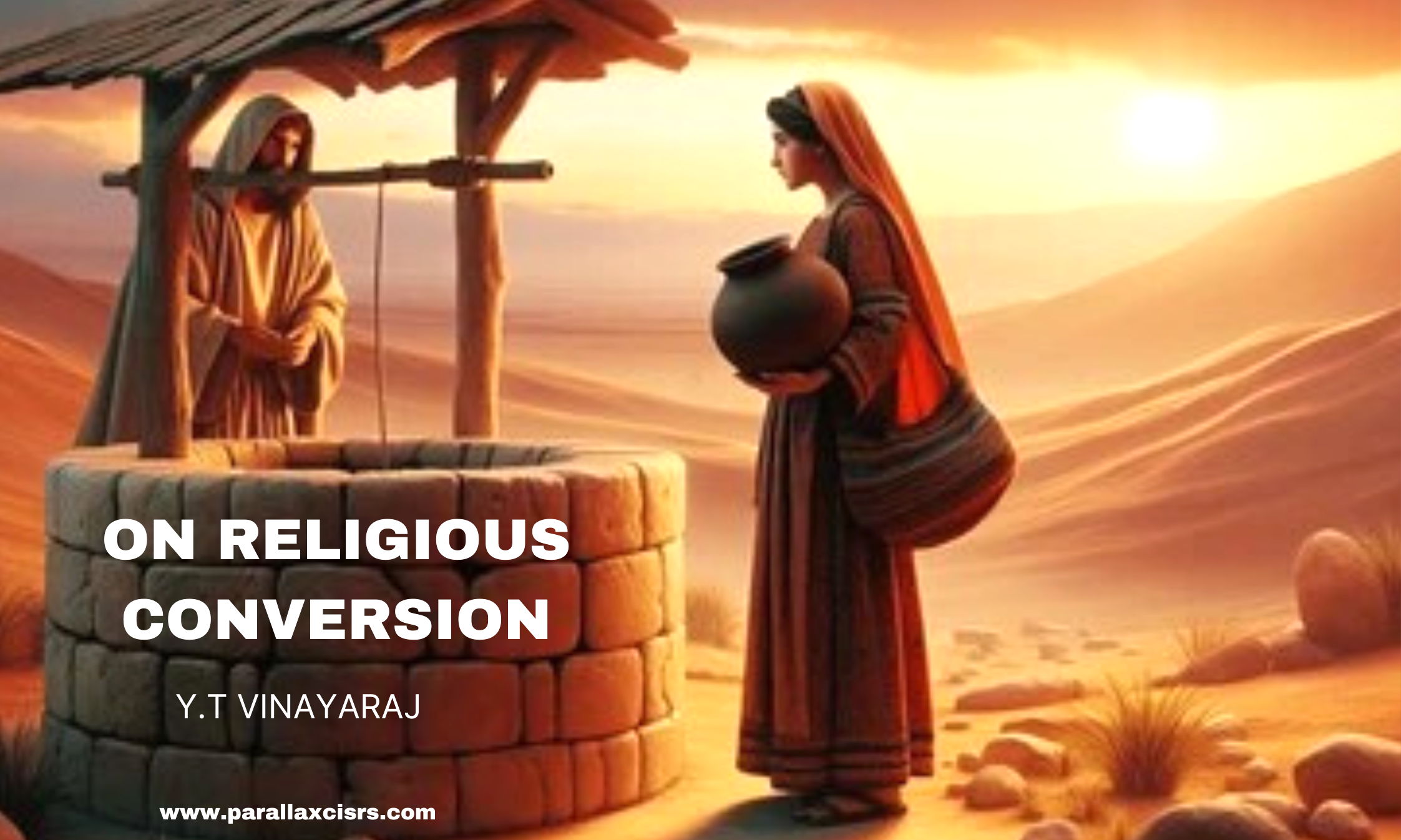
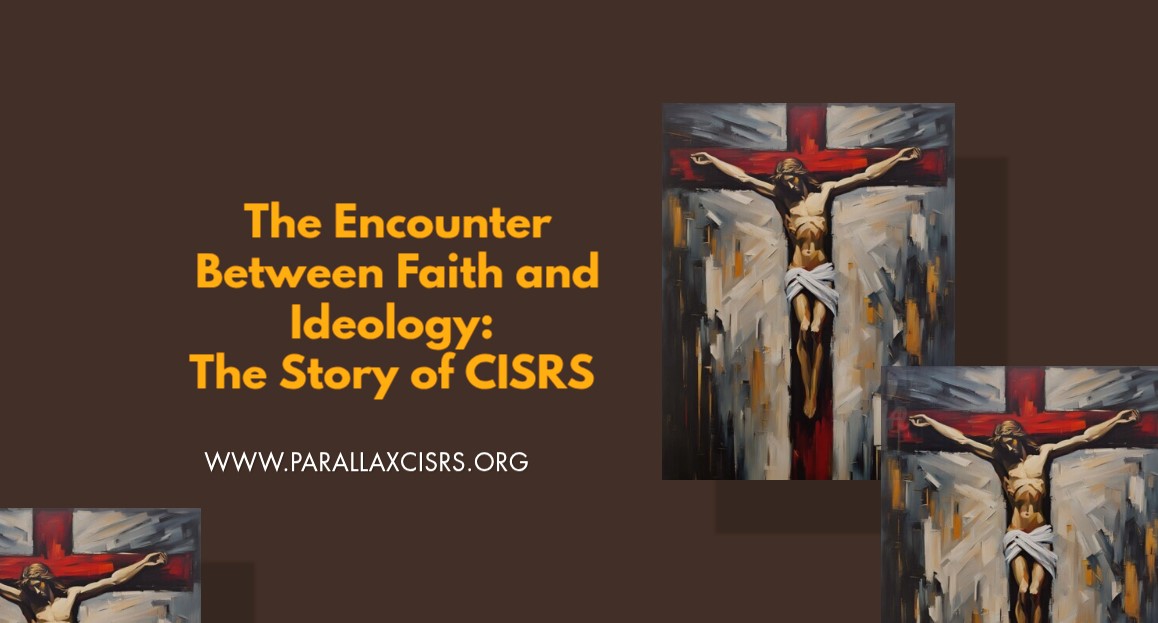
Note: The image depicts a biblical story in which Jesus engages in conversation with a Samaritan woman at a well. In their discussion, Jesus tells her, "Woman, believe me, the hour is coming when you will worship the Father neither on this mountain nor in Jerusalem...but... in spirit and truth" (John 4:21-23). This encounter highlights that faith is deeply personal and not imposed in any form.
Rev. Dr. Y.T. Vinayaraj serves as the director of the Christian Institute for the Study of Religion and Society (CISRS).
[1][1] On 6 December 1948, the Constituent Assembly discussed the issue of conversions by Christian missionaries, while debating amendments to the freedom of religion under Article 25 of the Constitution (Article 19 in the Draft Constitution). For excerpts of the debate see “Not Ensuring Freedom, but Toleration: The Constituent Assembly Discusses the Fundamental Right to Propagate a Religion.” The Caravan, 30 August 2017. Accessed 11 August 2025. https://caravanmagazine.in/vantage/constituent-assembly-right-to-propagate-religion.
[2] Rev. Dr. T.M. Philip, Mathethara Rashtrathile Christhava Dauthyam (Thiruvalla: CSS, 1999).
[3] M.M. Thomas, Risking Christ for Christ’s Sake: Towards an Ecumenical Theology of Pluralism (Geneva: WCC Pulbication, 1987).
Become a member
Get the latest news right in your inbox. We never spam!



Comments
No Comments