
DE-NATIONALISING AND DE-RITUALISING CHRISTMAS
Christ beyond Flags and Festivities
Rev. Dr. Viji Varghese Eapen
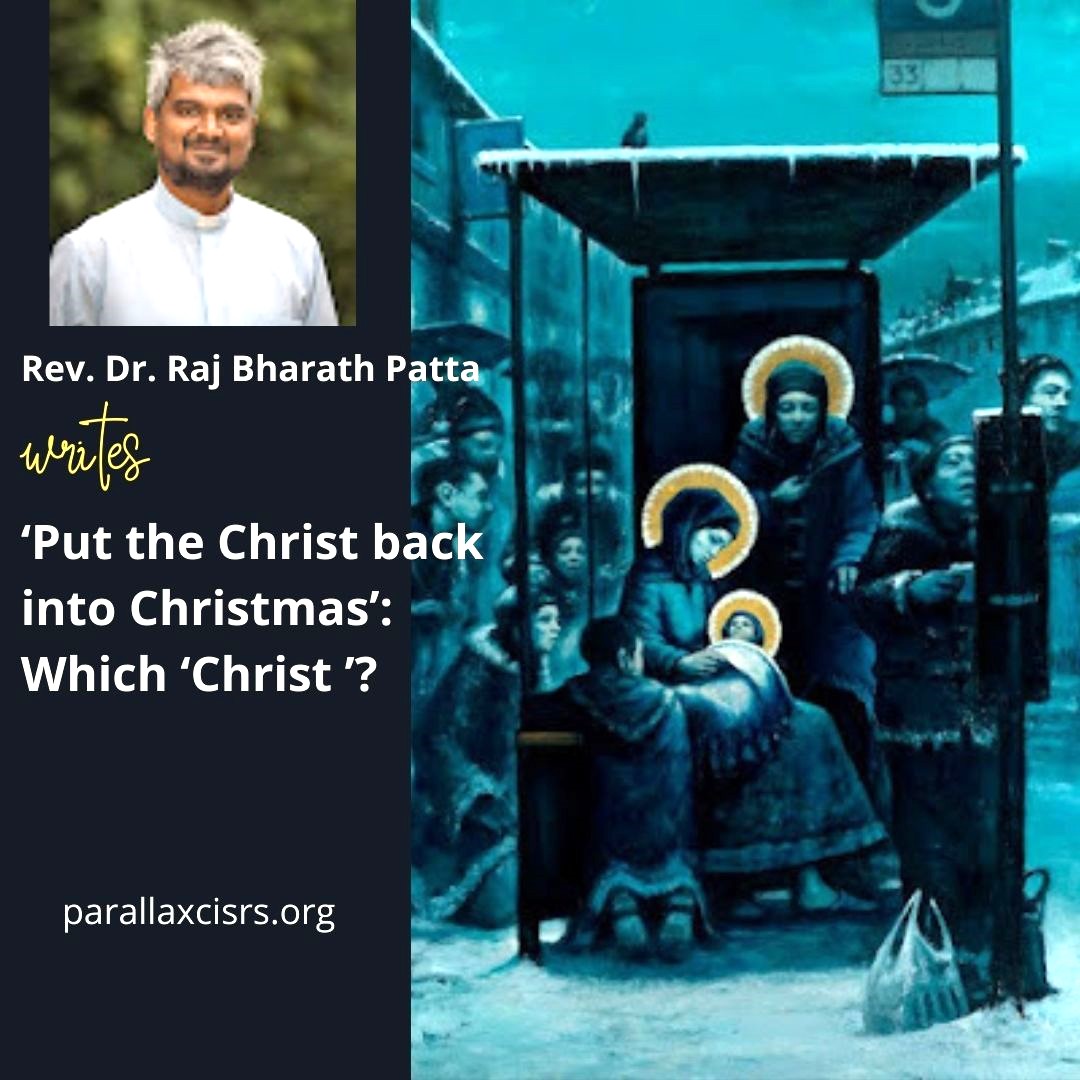
On 13 December 2025, Tommy Robinson (Stephen Yaxley-Lennon), a far-right and anti-migrant figure in the United Kingdom, urged supporters of his “Unite the Kingdom” movement to attend a Christmas carol concert to “put the Christ back into Christmas”. Attendance at Whitehall near Downing Street fell dramatically—from an estimated 110,000–150,000 at a Robinson-led protest in September to a few thousand—yet the episode reveals a broader and troubling attempt to nationalise Christmas by turning Christ into a cultural symbol that legitimises fear, exclusion, and identity politics. It also generated strong resistance. The Church of England responded with public posters proclaiming, “Christ has always been in Christmas” and “Outsiders welcome”, while musician Billy Bragg released an album titled Put Christ Back into Christmas, reclaiming the phrase as a counter-narrative. Theologians such as Raj Bharath Patta sharpened the decisive question: which Christ is to be put back into Christmas? Not a Christ enlisted to legitimise hatred or nationalist projects, nor one reduced to ritualised proclamations, but the Christ revealed in the liberative ministry of Jesus, who stands with the marginalised and confronts oppressive powers.
This appeal not only exposes the global resurgence of the far right, driven by xenophobia, but also the hollowness of much contemporary Christmas language. Familiar slogans—“Christ must be born in our hearts,” “Love came down,” “Christ is the reason for the season”—have hardened into clichés that insulate rather than transform. Repeated uncritically, they render Christmas apolitical, unethical, anti-pedagogical, and de-missiological. De-ritualising Christmas, therefore, is not an abandonment of worship but its recovery from harmless repetition. Against this dilution, I argue that Christmas is intrinsically political, ethical, missiological, and pedagogical, as witnessed in Luke 2, and must be lived out across the interconnected spheres of society, family, ecclesia, and academia.
Christmas is Political
To de-nationalise Christmas is first to recognise that the nativity is irreducibly political. It does not occur in a religious vacuum or a sentimental setting, but within the hard realities of the Roman Empire. Luke deliberately situates the birth of Jesus during the reign of Augustus Caesar, under an imperial decree that required the registration of the entire population. The nativity unfolds under surveillance, taxation, and control. Like all empires, Rome demonstrated its power by reducing people and resources to tools for generating wealth and consolidating authority. Money and power were sustained through the exploitation of conquered lands and bodies.
The census of Luke 2:1–3 is therefore not an incidental detail but a theological disclosure. Censuses enabled taxation, taxation financed the army, and the army ensured continuous conquest. Augustus Caesar, celebrated as a bringer of peace, lived in excess funded by the suffering of subjugated peoples. Movement was regulated, labour was extracted, and lives were reordered to serve imperial interests. This logic remains disturbingly familiar today. Though often exercised digitally and invisibly, modern systems continue to treat people—especially those at the margins—as expendable instruments for profit and power.
It is into this climate of fear that the angelic announcement breaks forth, not to emperors or elites, but to shepherds. “Fear not; for see, I bring you good news of great joy for all people.” Fear is the primary currency of empire. Empires govern through phobia—fear of punishment, fear of the outsider, fear of scarcity. The first word of Christmas is therefore a political refusal: “Fear not.” It dismantles the psychology of empire at its roots.
The angelic song sharpens this confrontation: “Glory to God in the highest heaven, and on earth peace.” Rome claimed glory for Caesar and peace through the Pax Romana, a peace secured by violence and domination. The angelic hymn functions as a declaration of counter-sovereignty. Glory is relocated from the emperor to God, and peace is redefined away from coercion towards justice and divine favour. This is not devotional language, but political resistance.
Crucially, God’s glory is revealed not at the imperial centre but among shepherds—those on the lowest rung of the social order. Christmas thus announces good news precisely by standing against the bad news of empire. It calls us to take our stand not with Caesars and Herods, but with shepherds and all who suffer under systems of domination. Any church or religion that aligns itself with empire forfeits its right to celebrate Christmas, for the Christ of Christmas is born not to stabilise power, but to subvert it.
Christmas is Ethical
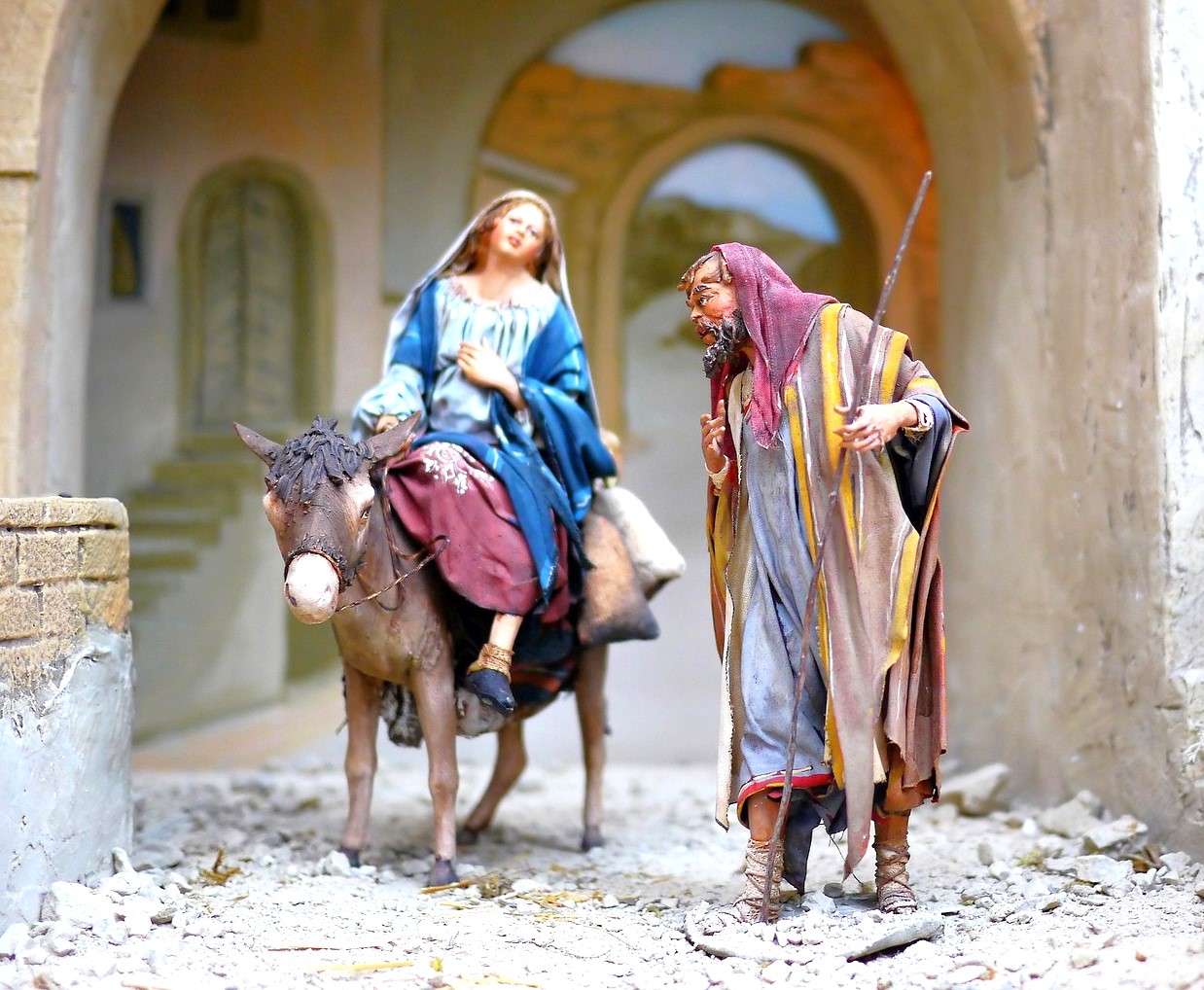
De-ritualising Christmas also requires attending to its ethical force, especially when read within the intimate space of the family. Luke tells us that the shepherds hurried to Bethlehem and found Mary and Joseph, and the child lying in the manger. The scene is spare and striking. Our traditional Christmas meditations often expand this moment by drawing attention to many figures: the infant Jesus, Mary, Joseph, angels, shepherds, wise men, the innkeeper, the manger, and the star. Yet there is one conspicuous absence in the canonical nativity narratives—a midwife.
This absence of a midwife is theologically and ethically significant. In the Jewish cultural context of the first century, childbirth was ordinarily assisted by women, particularly midwives. Their presence was not optional but expected. The silence of the Gospel texts therefore invites a serious question: who assisted Mary in giving birth? Later Christian imagination attempted to fill this gap. The Protoevangelium of James, composed in the mid-second century, introduces an unnamed midwife and her companion Shalome, weaving a dramatic narrative aimed at defending Mary’s virginity. These stories, echoed in later icons, served apologetic purposes during early doctrinal debates. However, the concern of this reflection is not the biological or doctrinal defence of virginity, but the ethical implications of the canonical silence.
What if there was no midwife at all? What if, in that vulnerable and urgent moment, Joseph himself assumed the role traditionally reserved for women? This possibility unsettles deeply ingrained assumptions about masculinity, caregiving, and family roles. Resistance to imagining Joseph as a midwife arises less from biblical evidence and more from patriarchal stereotypes that confine men to authority and distance them from care, tenderness, and bodily vulnerability.
Read ethically, Joseph emerges not as a passive figure on the margins of the nativity, but as one who rises to the demands of the moment. He transcends social expectations, not by power or dominance, but through responsibility, attentiveness, and solidarity with Mary. A “safe” Christmas, then, is not secured by divine intervention alone, but also by Joseph’s ethical courage—his willingness to cross gendered boundaries for the sake of life.
Christmas, in this sense, calls families to reimagine relationships of mutuality, justice, and care. It invites the dismantling of customs, traditions, and religious myths that continue to legitimise unequal gender roles. To celebrate Christmas ethically is to allow the vulnerability of Bethlehem to reshape our homes into spaces where care is shared, roles are fluid, and love is practised through concrete acts of responsibility.
Christmas is Missiological and Pedagogical
To de-nationalise and de-ritualise Christmas is finally to recover its missiological and pedagogical direction. It is missiological because it discloses the direction in which the Church, its liturgy, its ethics, and its witness must move. Christmas does not invite the Church to remain where it is, secure within sacred spaces and familiar rituals; it sends the Church outward, towards the places where God has already chosen to dwell. In this sense, Christmas defines the very trajectory of mission. God’s mission does not begin in temples or palaces, but in a manger, at the margins, among the vulnerable. If the Church is truly called to participate in God’s mission, it must continually ask whether its practices and priorities are oriented towards those places where life is most fragile.
Christmas is pedagogical because it teaches not merely through ideas, equations, and researches, but through embodied practice. The nativity is not a theory to be mastered but a lesson to be lived. Luke tells us that the shepherds hurried to Bethlehem and found Mary and Joseph, and the child lying in the manger. They did not pause to calculate status or propriety; they went straight to where life lay exposed and unprotected. In this sense, the shepherds emerge as wiser than the wise men, who initially assumed that a king must be born in a palace and therefore went first to the portals of power and pomp. True wisdom, Christmas teaches, is not located in proximity to power but in attentiveness to vulnerability.
Faith and knowledge—both spiritual and academic—are therefore meant to lead us to mangers: to roadsides, streets, and slums where many lives are still born into precarity. Our liturgies in churches and our equations in classrooms are rendered hollow if they do not move us towards these spaces. Worship and learning must become pilgrimages, drawing us away from comfort and towards “where the babies lie”. Churches and universities alike are called to educate for such movement, shaping imaginations that resist the glamour of power and choose the humility of service.
I am reminded of a Christmas carol service at CSI St Andrew’s Church, Machukad, Kottayam, where I asked who might become a “Christmas” for a visually challenged student preparing for his BA History degree examination, who needed a scribe younger than himself, as required by policy. After the service, a Higher Secondary student named Sairah came forward and volunteered. In that moment, liturgy flowed into mission, and learning became practice. Is this not Christmas continued beyond carols and sermons?
Mangers, then, are not merely geographical locations but social spaces of vulnerability. They call us not to charity alone, but to partnership—to celebrate Christmas together with those at the margins, recognising their agency and dignity. Only then does Christmas become pedagogical in practice and missiological in purpose.
Conclusion
If Christmas is political, it resists fear, exposes false claims of glory and peace, and stands with shepherds rather than Caesars. If Christmas is ethical, it reshapes the most intimate spaces of life, calling families into practices of mutuality, shared care, and justice that dismantle patriarchal norms. If Christmas is missiological and pedagogical, it demands movement—drawing worship beyond sanctuaries, learning beyond classrooms, and faith towards mangers understood as social spaces of vulnerability.
To de-nationalise and de-ritualise Christmas is not to weaken it, but to recover its gospel depth. It is to reclaim a way of life in which politics, ethics, and mission are reordered by the God who chose to dwell among the least. This Christ continues to disturb every faith that seeks comfort without conversion and celebration without transformation. The question with which we began—which Christ is to be put back into Christmas—can therefore be answered clearly: not a Christ serving nationalist fantasies or religious power, but the Christ of Bethlehem, who confronts empire, unsettles unjust relationships, and sends the Church to the margins.
Revd Dr Viji Varghese Eapen, a Presbyter in the Church of South India-Diocese of Madhya Kerala, currently serves as Principal, Bishop Mani Theological Institute, Kottayam, and Vicar, CSI St Matthew’s Church, Poovanthuruth, Kottayam
References
Bragg, Billy, Billy Bragg – Put Christ Back Into Christmas (2025)
Harman, Patricia, ‘Was There a Midwife at the Manger? Here’s What the History of Childbirth Says About the First Christmas’, TIME, 19 December 2018
Patta, Raj Bharat, ‘“Put the Christ Back into Christmas”: Which “Christ”?’, Parallax: An Open Journal of Political Theology, 18 December 2025
Sherwood, Harriet, ‘C of E to Challenge Tommy Robinson’s “Put Christ Back into Christmas” Message’, World News, The Guardian, 7 December 2025
This sermon was preached during the Christmas Carol Service held at CMS College, Kottayam, on 17 December 2025.
Become a member
Get the latest news right in your inbox. We never spam!








Comments
No Comments