
CISRS and the Study of Religion
The Christian Institute for the Study of Religion and Society (CISRS) has been crucial in shaping Christian theological perspectives on the study of religion in post-independent India. Founded by P.D. Devanandan and M.M. Thomas in 1950s, CISRS aimed to align Christian communities with the nationalist movement, fostering an indigenous Christianity that engages thoughtfully with Hinduism and other neighboring faiths to contribute to nation-building. P.D. Devanandan, the first director of CISRS, articulates a clear intention: 'the phase of nationalist struggle has ended, and we can now shape our political destiny. We have made progress in establishing stable national governments, but our main focus is to foster national solidarity and a unified community. This is particularly relevant in India, where Hinduism is recognizing its close ties to life.'[1]
P.D. Devanandan keenly observed the changes in Hinduism during the 19th-century Renaissance Movement initiated by Raja Ram Mohan Roy, which led to various religious reform movements like Brahmo Samaj and Arya Samaj. He termed this evolution "Neo-Hinduism," suggesting that Hinduism is adapting to modern liberal values and cultural shifts.[2]
Devanandan argued that the demands of secular nationalism require a transformation in people's understanding of community and the state, emphasizing that religions support progressive social values. He advocated for inter-faith dialogue, believing that engagement with Christianity could help update Hinduism in line with modernity and its liberal values.
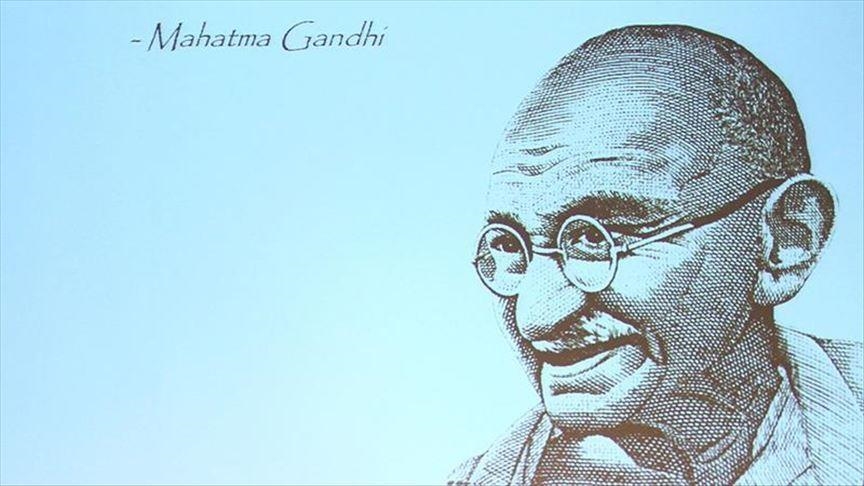
Devanandan emphasizes that Christian witness and participation in nation-building should be rooted in inter-faith dialogue and practical engagement. Inspired by Mahatma Gandhi and S. Radhakrishnan, he sought to create a philosophy of religion that could aid in forming a modern nation-state.
In contrast to traditional missionary strategies and the methods of Karl Barth and Hendrik Kraemer, Devanandan advocated for respect and engagement with diverse religions and cultures in India, promoting a vision of national humanism. This marked a significant departure from earlier Indian theologians, such as Brahmabandhav Upadhyaya and others, who leaned on Christian exclusivity.
Devanandan viewed redemption in Christ as holistic, encompassing all creation, including various communities and religions. He reframed religion as a cultural and historical phenomenon requiring progressive social change. M. M. Thomas built on Devanandan's ideas, culminating in his work, The Acknowledged Christ of Indian Renaissance (1969).
M.M. Thomas focused on Christo-centric interfaith dialogue, emphasizing a shared humanity for nation-building. He explored the significance of Christ and Christianity in Renaissance India through figures like Raja Ram Mohan Roy and Swami Vivekananda. He recognized the humanizing spirit of Renaissance Hinduism and its openness to Western education and Christianity.
Thomas urged Christian communities in India to acknowledge the 'hidden Christ' and highlighted the need for Christ as a catalyst for renewal. He believed that a living theology should arise from the encounter between Christ and Indian culture, advocating for interfaith dialogue as essential for meaningful Christian witness in India.
During Thomas's period in CISRS, there was a shift in understanding religion, leaning towards a secular interpretation of Christ and Christianity. Rather than focusing on mysticism, Thomas emphasized religion's role in social action, as articulated in his works, such as Salvation as Humanisation (1971) and The Secular Ideologies of India and the Secular Meaning of Christ (1976).[3] Wesley Ariarajah notes that M.M. Thomas further expanded the CISRS’ concept of religion from interfaith dialogue to addressing the socio-political realities of the country.[4]
Abraham Ayrookuzhiel, who joined CISRS in 1973, further, developed this socio-cultural approach, influenced by Emile Durkheim and Max Weber. He aimed to reflect the "live philosophy" of the masses, recognizing that religion often legitimizes power dynamics, thereby protecting dominant class interests. [5] His work focused on subaltern religious movements, particularly Dalit religion, which he deemed "popular religion" or “the religion of the oppressed.”
Ayrookuzhiel critiqued Brahminic Hinduism for perpetuating the marginalization of Dalits, arguing that true salvation is linked to their economic and political liberation.[6] He asserted that practices and texts of Brahminic tradition fail to represent the Dalit experience due to their exclusion and the stigma of untouchability.[7]
Ayrookuzhiel emphasizes the need to engage with anti-Brahminic religious movements in India to foster a meaningful secular democratic society. He argues that the resurgence of Brahminic Hinduism during the national liberation struggle is not a permanent framework. Today's humanization efforts focus on Dalits, Tribals, and women, prompting a new Renaissance that challenges domineering Hindu beliefs and practices. This shift necessitates understanding the religious and cultural issues faced by these marginalized groups in their quest for human dignity.
Since the 1980s, CISRS has defined religion as a socio-political and cultural artifact and positioned itself as a middle ground between modern secularism and religious fundamentalism, especially in response to the rise of Hindutva politics and cultural nationalism in the 1990s. CISRS has criticized these movements for threatening India's secular-democratic framework. In light of this, the organization has sought to engage with counter-religious political movements, such as the neo-Buddhist movement and the Dravida Munnetra Kazhagam in Tamilnadu. Since then, CISRS advocates for religious pluralism and interfaith engagement to promote social democracy and social justice. The organization calls on faith communities to prioritize socio-economic concerns over religious identities and urges collaboration across different faiths to foster a more just and humane society.[8]
Conclusion
From the early days of CISRS, thinkers like P.D. Devanandan and M.M. Thomas emphasized the historical aspect of religion, redefining it beyond Mircea Eliade’s view of religion as a unique, absolute system (sui generis).[9] Devanandan saw religion’s historical embodiment as a means for humanization, contending that modernity fosters new identities and communities. He viewed Renascent Hinduism as a potential partner for dialogue with Christianity in promoting transformation.
Devanandan's concept of inter-faith dialogue differed from the Western missionaries’ apologetic strategies, highlighting the distinct cultural identity of Hinduism and its spirit of renewal. M.M. Thomas, on the other hand, expanded on this by acknowledging a secular interpretation of Christ and religion, asserting that religion should engage with other faiths in a political and historical context, focusing on justice and ethical practice. He viewed secular koinonia, or secular fellowship, as a manifestation of the Kingdom in the world rather than just within the church. [10]
Abraham Ayrookuziel, along with Dalit and Tribal theologians, has critiqued both nationalist and secularist approaches for overlooking the issues of monoculturalism and mono-nationalism. They emphasized the importance of acknowledging indigenous religious traditions that challenge the epistemic dominance of elite communities and their political power. In response to the rise of Hindutva and religious fundamentalism in contemporary India, CISRS has adopted a radical perspective on religion. This perspective questions the doctrinal foundations of sovereign power in all religions, including Christianity. M.M. Thomas describes this process of deconstructing modern religions—particularly Christianity—as "risking Christ for Christ’s sake," highlighting the necessity of prioritizing the weak and the vulnerable over religious privileges.
Y.T. Vinayaraj, Director, CISRS, Bangalore/ 10.06.2026
[1] Devanandan, ‘The Gospel and the Hindu Intellectual,’ in Selections from the Books of Devanandan, second print (Bangalore: CISRS, 1983), 24.
[2] Devanandan, Resurgent Hinduism (Bangalore: CISRS, 1959). 18.
[3] Robin Boyd calls it the ‘turn to karma marga’ from the bhakti marga of his predecessors in the Indian Christian Theology. See, Robin Boyd, An Introduction to Indian Christian Theology (Delhi: ISCPK, 1969), 313.
[4] Wesley Ariarajah, ‘Dialogue in the Context of Asian Plurality: Pushing the Boundaries of Dialogue,’ in The Life, Legacy and Theology of M.M. Thomas, edited by Jesudas Athyal, George Zachariah and Monica Melanchthon (London & New York: Routledge, 2016), 223-234 at 224.
[5] A.M. Abraham Ayrookuzhiel, in Biennial Conference Report 1972, 57-58.
[6] A.M. Abraham Ayrookuzhiel, “Religion: A Way of Salvation or an Ideology Oppression: The Power Dimension of Hindu Village Religion—an Empirical Study” in Religion and Society, Vol. XXXII, No. 1, March 1985, pp 3-23.
[7] A.M. Abraham Ayrookuzhiel, Essays on Dalits, Religion and Liberation (Bangalore: CISRS, 2006), 7.
[8] Vincent Rajkumar, Editorial, Religion and Society, Vol. 64, No. 4, October 2019, iv.
[9] For critical reflection on Eliade’s notion of religion see, Russell McCutcheon, Manufacturing Religion: The Discourse on Sui Generis Religion and the Politics of Nostalgia (New York: Oxford University Press, 1997).
[10] M.M. Thomas, Salvation as Humanization: Some Critical Issues of the Theology of Mission in Contemporary India (Bangalore: CISRS/CLS, 1971), 19
Become a member
Get the latest news right in your inbox. We never spam!


Comments
No Comments