
CISRS at 70
How a generation redefined faith in action
From the 1943 ‘Social Manifesto for the Church’ to today’s struggles for justice, the Christian Institute for the Study of Religion and Society has placed faith at the heart of social transformation.
Samuel Abraham
In December 1938, a quiet suburb near Madras became the setting for a conference that would leave a lasting impact on Indian Christian thought. Nearly 470 delegates from 70 nations gathered at the Madras Christian College, Tambaram, for the International Missionary Council. Among them were 197 delegates from Asia, who challenged the intellectual dependence of Christian theology on the West and insisted that theology must speak from the concrete realities of Asian life.
The conference resonated with many young Christian thinkers. In the 1940s, the clouds of World War II loomed large, and India itself was passing through one of the most dramatic periods in its history following the Quit India movement. The troubling question for these youngsters was whether the church should concern itself with ecclesiastical issues while the nation wrestled with political liberty, justice and poverty.
‘Social Manifesto for the Church’
Five years after the Tambaram conference, at the Mar Thoma Students’ Conference in 1943, M.M. Thomas—who would later become the Moderator of the World Council of Churches (WCC) Central Committee from 1968 to 1975—presented a paper entitled “Social Manifesto for the Church”. It said: “The Church forms only part of the community and therefore, it should be the policy of the churches, wherever possible, to give their willing co-operation to and seek the co-operation of all men of goodwill, Christian or Non-Christian, in ethical and social action.... The Church should join with those forces which are working for a free, united and socialistic India, … and against exclusive communalism that sets up barriers in the way of national unity.”
The idea crystallised into an institution following a Student Christian Movement conference at Hyderabad in 1950. The Christian Institute for the Study of Society (CISS) thus formed in 1951 aimed to promote research on social problems; share these results with churches; and encourage the formation of a Christian social doctrine in India. Six years later, in 1957, the organisation broadened its scope to become the Christian Institute for the Study of Religion and Society (CISRS). M.M. Thomas, P.D. Devanandan (the first Director of CISRS), R.B. Manickam, R.W. Scott, Chandran Devanesan, C.S. Paul, C.T. Kurien, A.K. Thampy, Leonardo Schiff, Winbum T. Thouburn, E.V. Mathew and Russel Chandran were the pioneers of this movement.
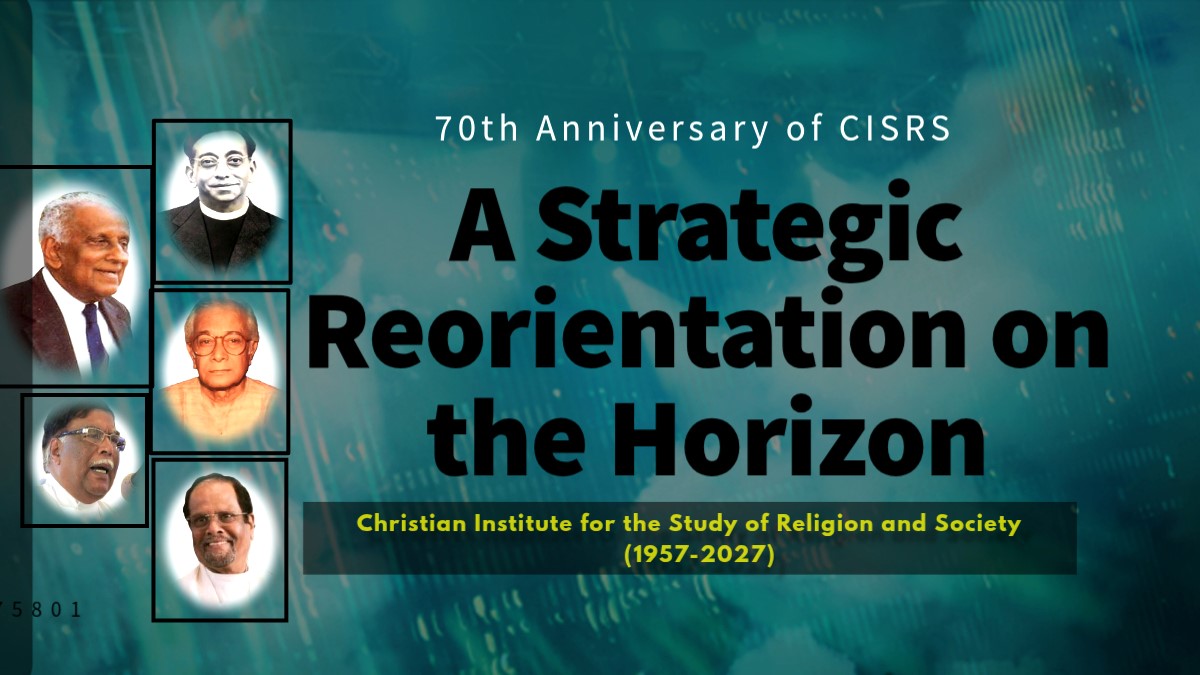
CISRS, which is described as the “research arm of the Indian churches” and the “think tank of Asian churches”, is commemorating its 70th anniversary next year. The year-long celebrations were inaugurated on June 17, 2026, at Thiruvalla by the Most Rev. Dr. Theodosius Mar Thoma Metropolitan. Says Director Dr. Y.T. Vinayaraj: “This moment in the life of CISRS is not about celebrating our history, but rather about reaffirming our commitment to the vision of its founders. We aim to embody the role of witnessing Christ, even amid complexities and challenges.”
According to George Mathew, the founder director of the Institute of Social Sciences in New Delhi, CISRS brought together two streams of thought: one “came from primarily study, research and scholarship to social concerns, and second, those who came from social concerns and social activism to study, research and scholarship. P. D. Devanandan and Stanley Samartha represented the former; M. M. Thomas represented the latter.”
Christian participation in nation-building
CISRS soon became a meeting place for theologians, economists, sociologists, activists and public intellectuals. Through seminars, consultations and publications, it encouraged Christians to think seriously about the future of a newly independent India. One of its earliest publications was Christian Participation in Nation Building (1960). It says: “With political independence, India has entered a period of national development. She has given herself a democratic constitution and is building up the political structures of a Nation-State. She has set her face to increase agricultural productivity, industrialize the country and enhance the nation's standard of living, through a planned process of economic development. She is also seeking to direct and control the changes in the structures and values of joint-family, caste, village and other traditional institutions of common life, with a view to developing new patterns of community. All these changes in the political, economic and social realms constitute a veritable revolution and ask for new religious and cultural foundations.”
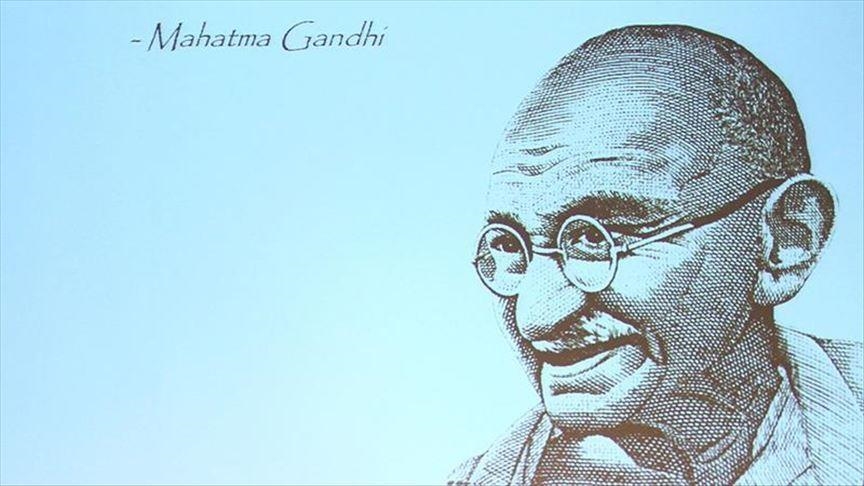
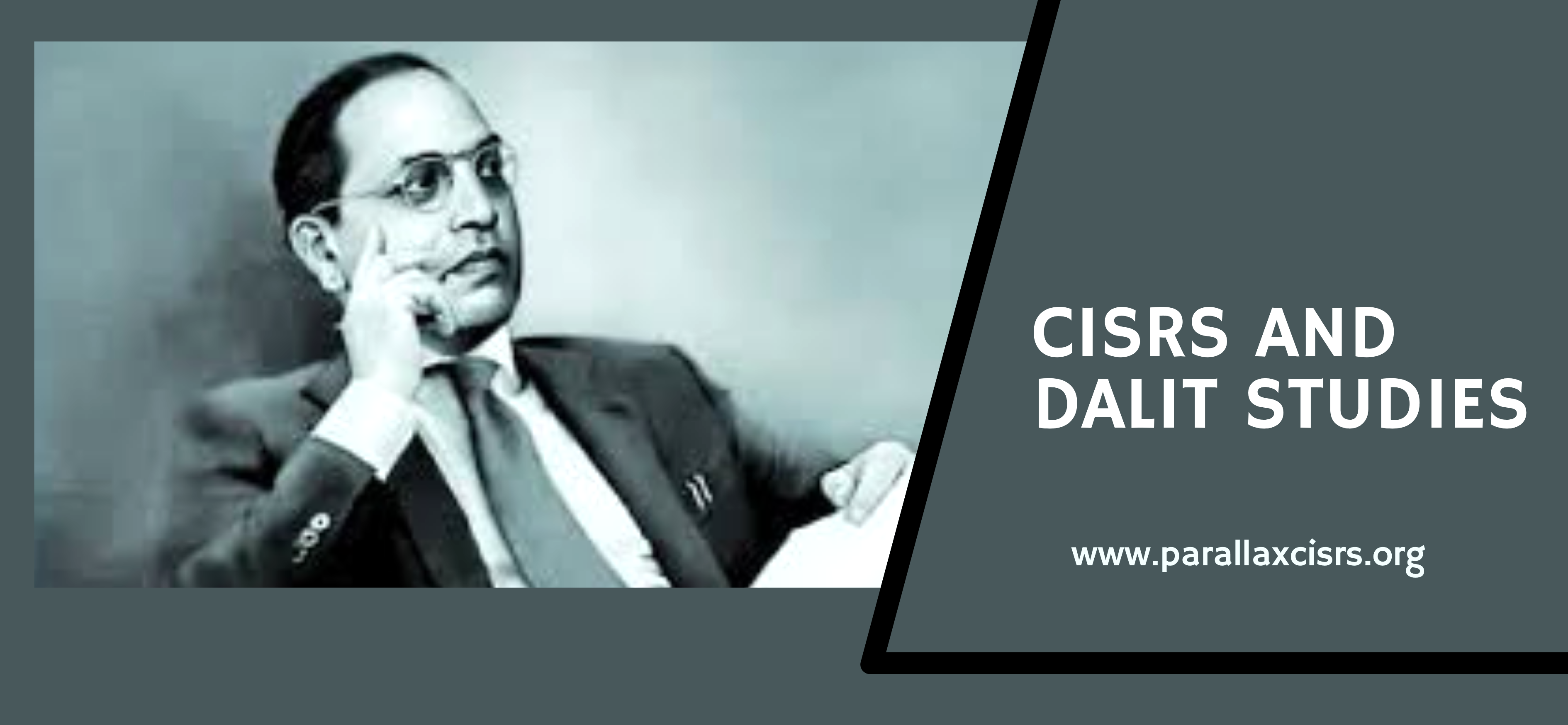
The Centre’s vision was inspired by a range of thinkers such as Rabindranath Tagore, Mahatma Gandhi, Jawaharlal Nehru, Ram Manohar Lohia and B.R. Ambedkar. It was also influenced by radical anti-Brahminical movements in Tamil Nadu and Maharashtra. All these helped CISRS champion an inclusive form of nationalism that emphasised multiplicity rather than homogeneity in terms of culture, religion and social life.
This broad approach distinguished CISRS from many institutions of its time. It encouraged the study of Indian religions not merely as objects of academic interest, but as living traditions. One of CISRS’ most influential contributions was the development of interfaith dialogue. The result was the emergence of a distinctly Indian Christian theology. Raimon Panikkar’s The Unknown Christ of Hinduism (1964), P.D. Devanandan’s Preparation for Dialogue (1964), and M.M. Thomas’s The Acknowledged Christ of the Indian Renaissance (1970) reflected these attempts to rethink Christian identity in conversation with India’s religious heritage.
The 1960s witnessed the growing influence of CISRS within the international ecumenical movement. The Third WCC Assembly held in New Delhi in 1961 emphasised the church’s responsibility towards society. P. D. Devanandan’s speech at that session was about dialogue being an indispensable calling and task of Christians.
Dalit and tribal consciousness
By the 1960s and 1970s, CISRS turned its attention to the lived experiences of Dalit communities and other marginalised groups. Studies on the position of the Scheduled Castes in Karnataka and an analysis of the economic aspects of Dalits in Tamil Nadu reflected this concern. Among the notable studies published by CISRS was Dr. Godwin Shiri's The Plight of Christian Dalits: A South Indian Case Study (1997), which was later cited in discussions around Dalit Christian reservation before the Supreme Court of India.
A consultation on “A Christian Approach to Tribal Communities in India Today”, held in June 1961, bringing together Christian leaders from tribal communities across India, led to the publication of Tribal Awakening (1965), based on research led by Nirmal Minz.
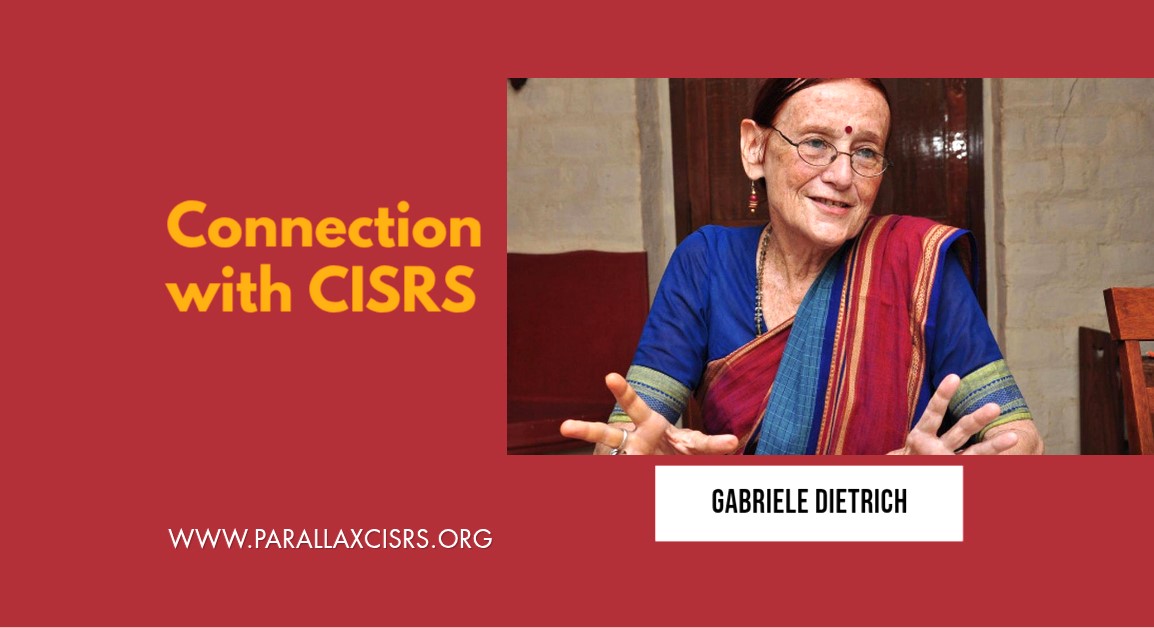
The 1970s were years of social struggle. Researchers and activists associated with CISRS increasingly found themselves drawn into questions of development, land rights, poverty and human dignity. Recalling her years with CISRS, activist-theologian Gabriele Dietrich observed that that research on religion and development inevitably led scholars into villages and people’s movements. The experience convinced them that “‘development’ could not be planned from above and certainly was not rooted in a relentless pursuit of economic growth. People’s struggles for social justice were absolutely crucial.”
Emergency years
The Emergency declared by Indira Gandhi in 1975, says George Mathew, “was a test period of the courage and democratic conviction of Indian intellectuals. During this period, Dr. M. M. Thomas was one of the few Christian leaders and thinkers who manifested their dedication to uphold the value of democracy. … The weekly Guardian, of which Dr. Thomas was the Chief Editor, published his early articles and editorials. But they were censored eventually. Then he started to bring about a cyclostyled Newsletter for publication of his articles against the emergency regime.” Later, George Mathew put together these reflections under the title Response to Tyranny.
The Emergency also produced unexpected solidarities. Gandhians, socialists, Marxists, church leaders and human-rights activists often found themselves on the same side in defence of democratic freedoms. After the Emergency was lifted and elections were announced, recalls Dietrich, there was a campaign under the title “Why the Ruling Congress Should be Voted Out of Power”. After Indira Gandhi’s defeat, CISRS held a consultation in Ernakulam in 1977 to assess the possibilities for people’s movements in the new situation. However, the disarray of the socialist forces brought many expectations to naught, she says.
In the decades that followed, under the leadership of Saral K. Chatterji, Godwin Shiri and Vincent Rajkumar, CISRS put the vision of justice into action. Dalit theology, Tribal theology, feminist and womanist theological perspectives found expression through its programmes, publications and consultations. CISRS’ journal Religion & Society and its newsletter The New Guardian still serve as vehicles of these perspectives.
Seventy years of witness
As CISRS approaches its 70th anniversary, neoliberal capitalism, ecological crises, religious nationalism, technological transformation, and new forms of authoritarian politics present challenges that CISRS’ founders could scarcely have imagined. These realities demand fresh theological and social reflection.
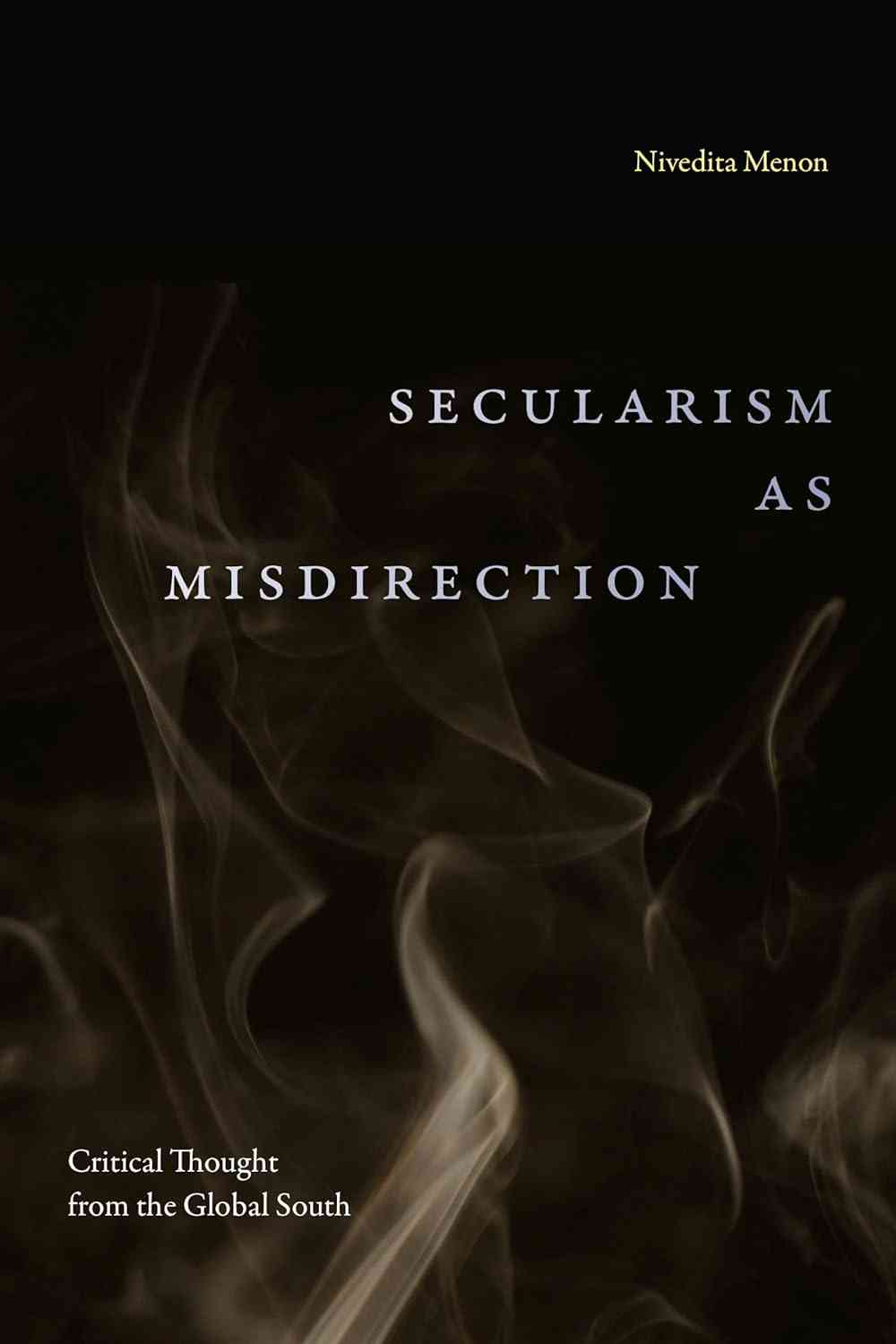
Rev. Vinayaraj writes: “In today's context, marked by neoliberalism, neofascism, and neo-Zionism, there is an urgent need to develop a radical postsecular political thought and theology. This approach should explore different religions as ethical frameworks that shape individual and communitarian identities, contributing to the creation of a respectful society. The current perception of secularism, which promotes religious neutrality and treats religion as a private matter—often viewing it as a potential source of communalism and terrorism—challenges faith-based organisations like CISRS to affirm the ethical potential of various religions, especially in the emerging context of Islamophobia, Zionism, and Hindutva.”
The story of CISRS over the years is more than the story of an institution. It is the story of a conviction that faith should find expression outside the walls of the church and that theology must remain relevant to the struggles of ordinary people.
Samuel Abraham is a writer and former Associate Editor of Frontline. He is currently associated with CISRS, contributing to its publication and editorial initiatives. He can be reached at samks1964@gmail.com
References
Mathew, George. “Religion and Society: CISRS as a Case.” In Religion and Justice, edited by Y. T. Vinayaraj, 147–160. Delhi: ISPCK, 2023.
Thomas, M. M. Ideological Quest within Christian Commitment, 1939–1954. Madras: Christian Literature Society, 1983.
Thompson, A. Frank. The Christian Institute for the Study of Religion and Society: A Research Arm of Christian Churches in India. Lewiston, NY: The Edwin Mellen Press, 1992.
Become a member
Get the latest news right in your inbox. We never spam!


Comments
No Comments